
India and Pakistan agreed on May 10 for a cessation of firing and military activity as a result of 'direct contact' between the director generals of military operations (DGMOs) of both nations, which was 'initiated by the Pakistani side', the Centre informed Parliament on Friday.

Military spokesman Maj Gen Waheed Arshad said the first suicide attack occurred at a checkpoint outside the Pakistan Army's general headquarters while the second was carried out on a bus carrying defence personnel.

"If 5,000 of these folk (some have estimated the strength of the LeT upwards of 150,000) decide to come out tomorrow in defense, there would be no police -- nowhere in sight. They could take over the city."

China's ruling Communist Party is holding its annual leadership conclave to discuss the new five-year plan, the impact of US President Donald Trump's tariff war, and the ongoing anti-corruption crackdown in the military.
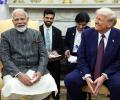
Congress general secretary Jairam Ramesh said Modi should take inspiration from former prime minister Indira Gandhi and stand up to the president of the United States.

Pakistan has banned Indian-flagged ships from entering its ports with immediate effect after India imposed fresh punitive measures, including a ban on the import of goods and entry of Pakistani vessels into its ports, against Islamabad amid heightened tensions following the Pahalgam terror attack. The move comes after India announced a raft of punitive measures against Pakistan, including the suspension of the Indus Waters Treaty, shutting down of the only operational land border crossing at Attari, and downgrading of diplomatic ties following the terror attack. The Pakistan Army has also conducted a successful training launch of the Abdali Weapon System, a surface-to-surface missile with a range of 450 km, saying it was aimed at ensuring the operational readiness of troops and validating key technical parameters. India considers the test launch of the ballistic missile a "blatant" act of "provocation."
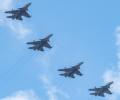
Pakistani military targets at Rafiqui, Murid, Chaklala, Rahim Yar Khan, Sukkur and Chunian were engaged using air-launched precision weapons from Indian fighter jets and the retaliation largely focused on command and control centres, radar sites and weapon storage areas, Qureshi said.
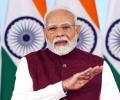
Presenting the full text of Prime Minister Narendra Modi's address to the nation on May 12, 2025, in which he dictated India's new doctrines on countering terrorism.

For India, it is a symbol of will and a successful feat of arms.

Lieutenant General Vinod Khandare (retired), former principal adviser to the Ministry of Defence, discusses the implications of Operation Sindoor, including its impact on India's diplomatic relations and the need for improved civil defense.
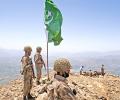
Khan's detention was first reported by BBC Urdu, which said the officer had been serving in the Regulation Directorate of the General Headquarters for two years and went missing one-and-a-half months ago.

'If China shows greater concerns for Indian interests, ties could improve. Otherwise, the thaw could be short-lived.'
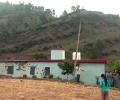
Heavy Pakistani shelling in the border district of Poonch in Jammu and Kashmir left nine people dead and 28 injured. The shelling, described by residents and officials as "barbaric and cowardly", started around 2 am, damaging dozens of residential houses, shops, vehicles, and heritage sites. The incident comes after India launched "Operation Sindoor" in retaliation to the April 22 Pahalgam terror attack. India condemned the act, calling it a cowardly attack on civilians, and reaffirmed that civilian safety remains its top priority.

The Congress party has criticized the Modi government's approach to China following Prime Minister Narendra Modi's meeting with Chinese President Xi Jinping, questioning whether the government is legitimizing Chinese aggression.

'The struggle of insurgents and pro-independence political activists is fuelled by a deep conviction that not only is a free Balochistan possible, but they also believe that Pakistan will inevitably break apart, leading to Balochistan's independence.'

A new book reveals that India and Pakistan discussed a communal division of Jammu & Kashmir along the Chenab river before the Kargil war in 1999.
The launch of the first-ever direct train service from Delhi to Kashmir would be a big turning point in the Valley's mood and its integration with India. He had to thwart it at any cost, asserts Shekhar Gupta.

A search operation by a joint team of security forces is underway to track down three Pakistan-based Jaish-e-Mohammad (JeM) terrorists in a forested area of Udhampur district in Jammu and Kashmir on Friday, officials said on Friday.
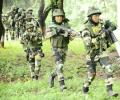
Among the medal winners are a deputy commandant rank officer, two assistant commandants and an inspector.

It is considered one of the most crucial appointments within the Indian Army, according to an official statement from the Ministry of Defence.
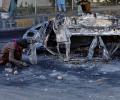
Pakistan's Punjab police have booked former prime minister Imran Khan and 1,500 of his party workers for attacking and setting on fire a top army officer's house in Lahore.

The Indian Army's para commandos killed the alleged mastermind of the Pahalgam terror attack, along with two associates, in an encounter near Srinagar.
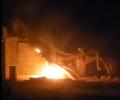
The nine targets struck under 'Operation Sindoor', four in Pakistan and five in Pakistan-occupied-Kashmir, were chosen by the IAF after receiving intelligence inputs about terror camps operating under the guise of health centres to evade detection at these sites, officials said on Wednesday.

The US needs to do three things to help the newly elected Nawaz Sharif government in Pakistan, says Stanley A Weiss

The Pahalgam massacre highlights the evolution of terrorism into a multi-domain challenge. India's response must similarly evolve -- from tactical retaliation to comprehensive strategic deterrence. To establish a credible and sustained deterrent, India must also carry out continuous kinetic operations, both overt and covert, suggest Sakshit Raina and Rahul Mishra. To establish a credible and sustained deterrent, India must also carry out continuous kinetic operations, both overt and covert, suggest Sakshit Raina & Rahul Mishra.
The elected government in Pakistan has found that the little control it had over the army has been completely eroded, says B Raman
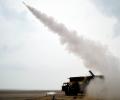
The Indian Army in the intervening night of May 8 and May 9 successfully repelled and responded to multiple drone attacks by Pakistan along the western border and the Line of Control (LoC) in Jammu and Kashmir.

Chief of Defence Staff Gen Anil Chauhan identifies China border dispute as India's biggest national security challenge, followed by Pakistan's proxy war. He also highlighted regional instability, future warfare scenarios, and dealing with nuclear-armed adversaries as major concerns.
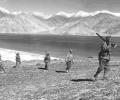
As India and China continue to face off across the Himalayas six decades later, the echoes of that earlier conflict remain unmistakable. The core of China's sensitivity lies not in maps or mountain passes, but in its perception of sovereignty over Tibet, points out Dr Kumar.
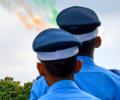
An Indian Air Force paramedic, who lost his hand in an operation, is regaining independence with the help of a cosmetic hand and support from the Artificial Limb Centre in Pune. The centre is also helping other armed forces personnel recover from severe injuries.
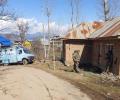
Security agencies are concerned about the increasing use of drones by terror groups in Jammu and Kashmir for surveillance and logistics, replacing human networks.

People along the Line of Control and International Border in the Jammu region continue to live under the shadow of death, with unexploded mortar shells fired by Pakistani troops still embedded in farmlands and residential areas even though hostilities have stopped for nearly a week. IMAGE: Kindly note that this image has been posted for representational purposes only. Photograph: / Rediff.com Despite the May 10 understanding between India and Pakistan, locals describe the border areas as a 'death trap'. Sixty-two-year-old Balvinder Singh, who returned to his home in Pargwal sector on May 14, recounted a narrow escape. "Two shells exploded in our compound, damaging our house. Three more landed on our farmland. We were terrified and told our family to stay away from the fields until the Army could help," Singh told PTI. Army engineers later came to the village and safely defused the unexploded shells, bringing a temporary sense of relief. "Fear is writ large on the faces of people to these death traps in border hamlets", he said. Scenes of destruction are evident rooftops torn apart, broken houses, windows punctured by shrapnel, and carcasses of cattle lying in pools of blood. The acrid smell of gunpowder still lingers in the air. Sardar Gurmeet Singh faced a similar ordeal. His family could not re-enter their home as a live mortar shell had sunk into the compound in a village close to the International Border. "The army's bomb disposal squad removed it after four days, allowing us to finally enter, back home," he said. Indian Army engineers have launched a sweeping clearance operation across border districts, defusing over 80 unexploded shells in the past five days -- including 6 in Pargwal, 19 in Rajouri, 42 in Poonch, and 12 along the IB. "These shells, mostly 120 mm calibre, have a range of 15 to 30 km and pose a serious threat to both civilian and military targets," an Army officer said. "Many of them were fired by Pakistan during recent hostilities." On May 7, the Indian Army launched Operation Sindoor, conducting precision strikes on nine terror hubs in Pakistan and Pakistan-occupied Jammu and Kashmir (PoJK) in response to the April 22 terror attack in Pahalgam that killed 26 people, most of them tourists. The subsequent retaliation by Pakistan pushed the region to the brink of war. From 7 to 10 of May, 27 civilians were killed and over 70 injured in Pakistani shelling in the Jammu region. Farid Din Gujjar, a resident near the border, expressed fear about returning to his fields. "Several shells created deep craters in our paddy land. We cannot resume work until all unexploded ordnance is cleared. It's a death trap," he said. Army units, in coordination with Jammu and Kashmir Police, have evacuated high-risk zones and issued stern warnings to residents not to touch any suspicious objects or unexploded shells. In one major operation, 42 live shells were safely destroyed in the Poonch villages of Jhullas, Salotri, Dharati and Salani. "All safety protocols were followed. The shells posed a serious danger to local lives," an Army spokesperson said, calling the effort a 'continued commitment to protect civilians and restore normalcy'. Poonch saw the vast majority of deaths due to shelling. Security officials said that Pakistan used a mix of mortar shells, armed drones, and missiles during the shelling spree, specifically targeting civilian habitations and border towns in Jammu, Samba, Kathua, Rajouri, and Poonch. As clearance operations continue, the border residents are slowly returning to their homes, but with caution, fear, and lingering uncertainty about shelling that may yet happen in the future.

'The obsession of the Pakistan army with India leads to several destabilising things. Support for the Taliban in Afghanistan. Support for groups like the Lashkar-e-Tayiba, that have attacked India. Every time you get an attack like that there is a possibility of a war. And then the build up of the their nuclear arsenals. Chances of a nuclear weapon landing in the hands of a terrorist group, or a nuclear war breaking out, are tiny. But they are higher here than anywhere else in the world.'
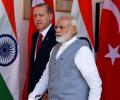
India-Turkiye ties are strained over Ankara's Islamabad tilt, its arms links with Pakistan, and fallout from the Pahalgam terror attack.
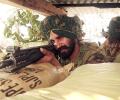
The Indian Army demonstrated how India's air defence systems saved the Golden Temple in Amritsar and other cities in Punjab from Pakistani missile and drone attacks on May 8 and 9, 2025.
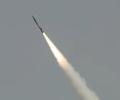
The army said the missile launch was part of "Exercise INDUS" without giving details about the exercise.

Tahawwur Hussain Rana, a key accused in the 26/11 Mumbai terror attack case, had helped co-conspirator David Coleman Headley to obtain an Indian visa, a Mumbai police official familiar with the probe said. Rana was arrested by the National Investigation Agency (NIA) on Thursday evening following his extradition from the United States. Rana, who had served in the Pakistan Army medical corps, had emigrated to Canada in the late 1990s and started an immigration consultancy firm. He later moved to the US and set up an office in Chicago. Through his firm, Rana gave cover to Headley to carry out reconnaissance mission in Mumbai prior to the November 2008 attacks and helped him get a ten-year visa extension. During his stay in India, Headley used the front of running an immigration business and was in regular contact with Rana. There were more than 230 phone calls between the two during this period. Rana was also in touch with 'Major Iqbal', another co-conspirator of the attacks during this period, as per the NIA charge sheet. Rana himself visited India in November 2008. As per the charge sheet filed by Mumbai Police against Rana in 2023 in the 26/11 attack case, he lived in a hotel in Powai, and had a discussion about crowded places in South Mumbai with a person who has been listed as a witness in the case. Subsequently, some of these places were targeted by the Pakistani terrorists during the deadly attacks that claimed 166 lives.

'Even known names and social media handles went berserk by stating that Karachi has been attacked and an F-16 was shot down.'
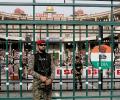
India registered its protest at the board of IMF, which met on Friday to review the EFF lending programme for Pakistan.

The PCB said the two boards will work together to finalise new dates to complete the series.
